


















Welcome to Codidact Meta!
Codidact Meta is the "town hall" (meta-discussion site) for the Codidact community network and the Codidact software. Whether you have bug reports or feature requests, support questions or rule discussions that touch the whole network – this is the site for you.
Comments on Should we start displaying the score of a post instead of the raw votes?
Parent
Should we start displaying the score of a post instead of the raw votes?
Currently, when viewing a post, Codidact will show you the raw votes on a post, with the breakdown into upvotes and downvotes:
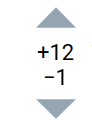
There's been some feedback that this is a bit too much to show, especially coming from platforms like Stack Exchange where they generally just show the aggregate score of upvotes and downvotes as one number (with the option to expand the votes to see the split). We decided to show both counts automatically to better show when there's controversy.
However, we now also have another option. We have a method for scoring posts that assigns a score between 0 and 1 to each post.
Perhaps instead of showing the raw votes on each post, we should instead show the post score (e.g. 0.81363... or 0.3793...), rounded to the nearest two or three decimal places (so that it would show as 0.937 or 0.276), with the raw votes available on request, perhaps either on click or in the tools menu.
This would take people a bit of time to get used to, but it might be worth that initial adjustment time, since this... is our scoring system and we want people to be familiar with it quickly.
This has the added benefit of making it much clearer why answers are sorted the way they are by displaying their score (that's currently computed without being displayed) for everyone to see. The raw votes matter less than the computed score.

Why show scores at all? When I was at Stack Exchange, we spent a good deal of time discussing sort orders in the cont …
3y ago
Background: the information content being presented In principle, the number of upvotes and number of downvotes on a …
3y ago
If we show raw Wilson score I think we're going to see a lot of confusion and questions -- "is 0.65 good?" "what does it …
6y ago
I agree that on a list of questions, one clear indicator of fitness is most helpful. On a post's own page, it might make …
6y ago
All the proposals so far are missing what people really want to know, which are two orthogonal metrics: How good/bad …
6y ago
instead of - Absolutely not! Showing separate + and - votes is a good thing. Or as they say, that's not a bug, it's a …
6y ago
Just a thought that occurred to me: One problem when seeing the Wilson score when not knowing it is that it's not cle …
10mo ago
In my view displaying fractional numbers representing an unintuitive measure would be even worse than displaying two int …
3y ago
Post
Just a thought that occurred to me:
One problem when seeing the Wilson score when not knowing it is that it's not clear how to interpret it. I think that could be helped by simply displaying 2*score-1 instead. This is a linear and strictly increasing transformation, so it would still fit with the ordering according to Wilson score, but its sign tells immediately whether there were more upvotes or more downvotes, just like with the difference.
To avoid fractional numbers, but still get across clearly that it is not an absolute number, it could be displayed as percentage, so the display would be between −100% (very bad) and +100% (very good). That also would immediately make clear the limits, as when seeing a percent sign, everyone knows that 100% is typically the maximum you can get.
Edit:
Let me add the advantages I see of this scaled Wilson score:
-
Posts start out with a score of 0. That is a natural starting point.
-
The sign of the score immediately tells you whether the post is seen positively or negatively by the community. Indeed, the sign is exactly the same as for the vote difference on Stack Exchange.
-
The absolute value of the score also has an independent meaning: It tells you how strongly the community feels about the quality of the post.
-
It also fits perfectly with the existing graphical display: The middle from where the bars start is zero, the direction of the bar is the sign, and the length of the bar is the absolute value.
-
And, as mentioned before, the order is exactly the same as the Wilson score before scaling.

1 comment thread